3180 Middle Rd, Columbus, IN 47203


Missing teeth affect more than your smile. They can change the way you eat, speak, and feel about yourself every day. Many patients comparing dental implants and dentures want to know which option lasts longer, feels more natural, and supports long-term oral health. The right choice depends on your bone health, lifestyle, budget, and the number of teeth missing.
If you have lost one tooth, several teeth, or an entire arch of teeth, you have more than one way to restore your smile. Two of the most common solutions are traditional dentures and dental implants. Both can improve appearance and function, but they work very differently.
At Columbus Periodontics & Implants in Columbus, we understand that choosing between dental implants and dentures isn’t just a dental decision; it’s a personal one. We’re here to help you navigate your options with clarity and care.
Dentures: The Tried-and-True Option
Dentures are removable appliances designed to replace missing teeth and surrounding gum tissue. They remain a common option for patients missing multiple teeth or a full arch of teeth.
Depending on your needs, dentures may be:
- Full dentures for complete tooth loss
- Partial dentures for several missing teeth
- Immediate dentures placed soon after extraction
Modern dentures look more natural than many people expect. Advances in dental materials allow for improved comfort, appearance, and fit compared to older styles.
Benefits of Dentures
Lower Upfront Cost
Traditional dentures usually cost less initially than dental implants. For patients looking for a more affordable tooth replacement option, dentures may provide a practical starting point.
Non-Surgical Treatment
Dentures do not require implant surgery. This can appeal to patients with medical concerns, limited bone volume, or those who prefer to avoid surgery altogether.
Faster Treatment Timeline
In many cases, dentures can be completed faster than implant treatment. Patients who need to restore appearance quickly often appreciate the shorter process.
Limitations of Dentures
Although dentures help many patients, they do come with trade-offs.
Movement While Eating or Speaking
Even well-made dentures can shift or loosen during meals or conversations. Adhesives may help temporarily, but some patients continue to notice instability.
Bone Loss Over Time
Dentures sit on top of the gums rather than integrating with the jawbone. Without stimulation from tooth roots, the bone beneath the denture gradually shrinks. Over time, this can affect fit and facial appearance.
Dietary Restrictions
Certain foods become harder to eat with removable dentures. Tough meats, sticky foods, and crunchy items may feel uncomfortable or difficult to chew.
Ongoing Adjustments
As the jaw changes shape, dentures often require relining, repairs, or replacement to maintain comfort and function.
Dental Implants: The Modern Dental Restoration
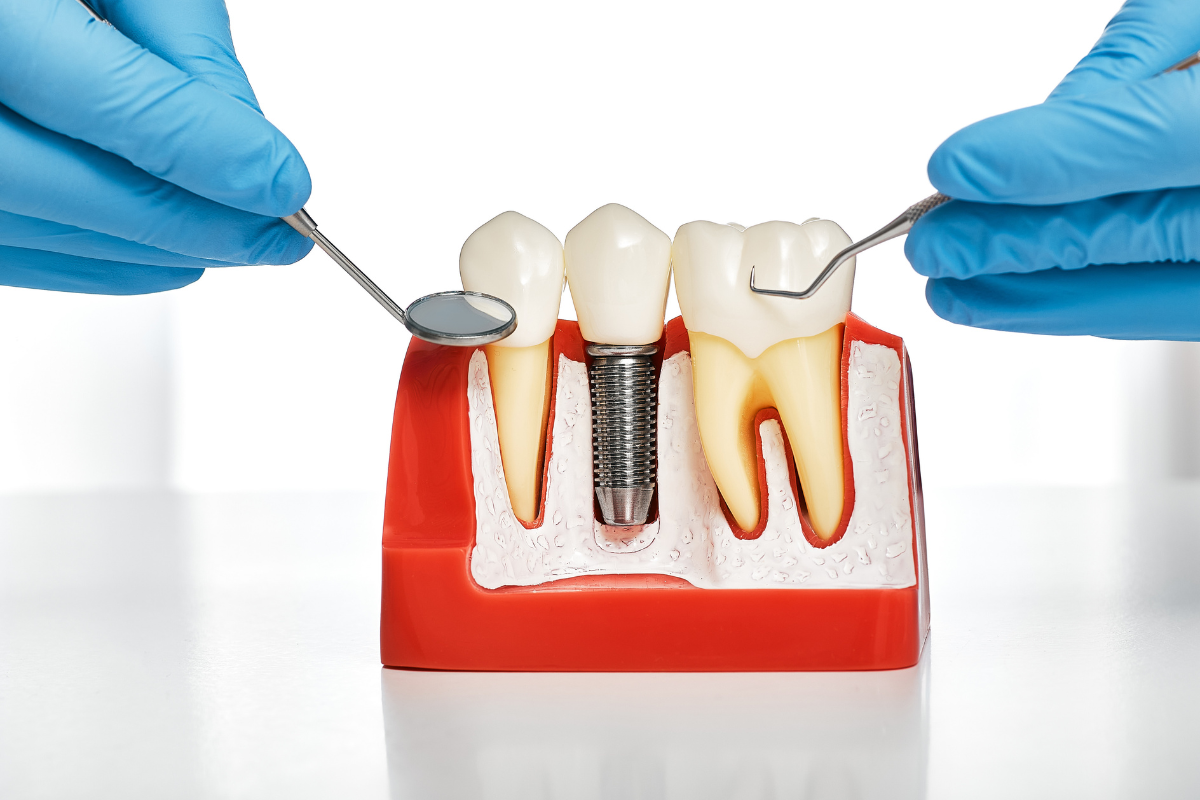
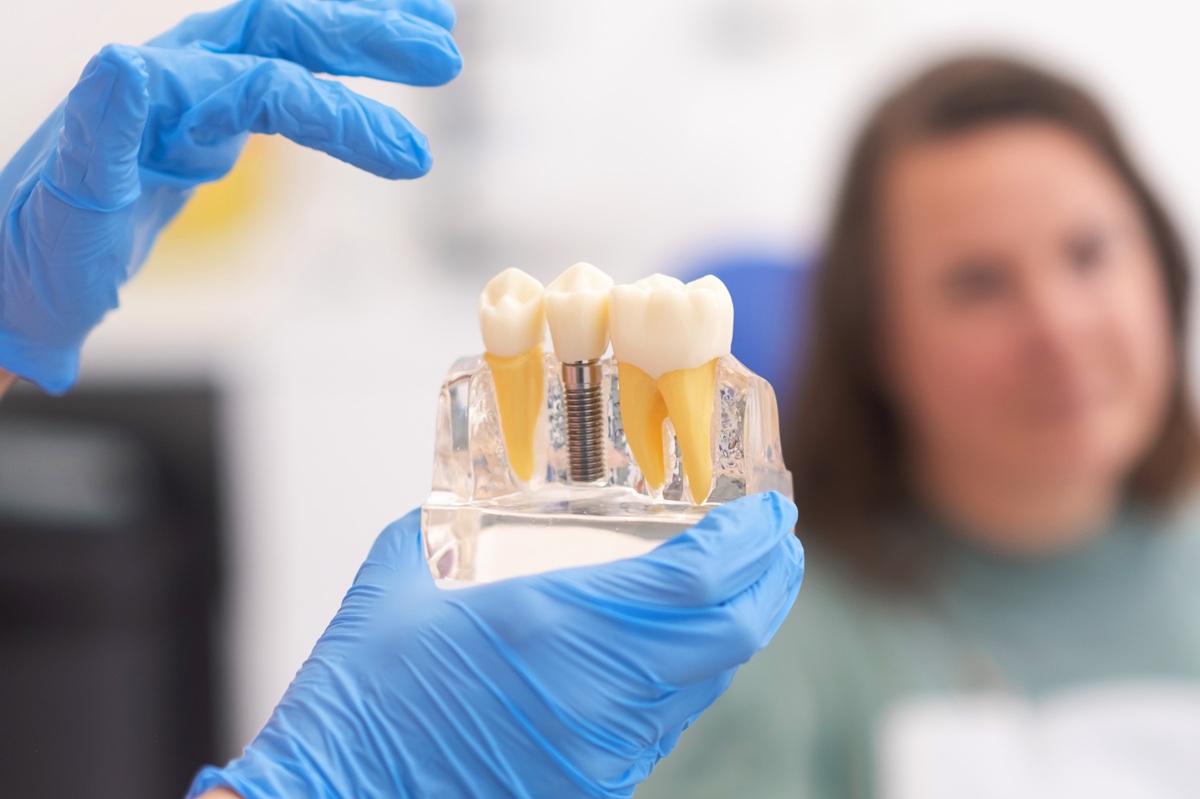
If you’re looking for something that feels as close to natural teeth as possible, dental implants are hard to beat. They replace missing tooth roots using small titanium posts placed into the jawbone. Once healed, the implants support crowns, bridges, or implant-supported dentures.
Unlike removable dentures, implants become part of the jaw structure. This creates a stable foundation that closely mimics natural teeth.
Benefits of Dental Implants
Natural Feel and Function
Dental implants allow patients to bite, chew, and speak with confidence. Because the implants anchor securely in the jawbone, they feel much more like natural teeth than removable appliances.
Long-Term Durability
With proper oral hygiene and routine dental care, implants can last for decades. They resist decay and offer excellent long-term stability.
Jawbone Preservation
When implants fuse with the jawbone, they stimulate the bone much like natural tooth roots. This helps reduce bone deterioration after tooth loss and supports long-term facial structure.
Improved Comfort
Because implants stay fixed in place, patients do not experience the slipping, rubbing, or pressure points often associated with traditional dentures.
Implant-Supported Dentures: A Middle Ground
Some patients want the security of implants without replacing every missing tooth individually. Implant-supported dentures combine features of both treatments.
Instead of resting only on the gums, these dentures attach securely to dental implants placed in the jawbone.
This approach can:
- Improve chewing strength
- Reduce denture movement
- Increase comfort
- Support jawbone health
- Provide a more secure fit
Implant-supported dentures remain especially popular among patients struggling with loose lower dentures.
Which Option Lasts Longer?
Traditional dentures typically need replacement every several years due to wear and changes in jaw shape.
Dental implants, on the other hand, can last much longer with proper care. While implant restorations may eventually require maintenance, the implant itself often remains stable for decades.
Longevity depends heavily on:
- Daily oral hygiene
- Gum health
- Smoking habits
- Routine dental visits
- Overall medical health
Personalized Care at Columbus Periodontics & Implants in Columbus, IN
If you are considering dental implants, dentures, or implant-supported dentures, Columbus Periodontics & Implants can help you understand your options clearly.
Dr. Katherine E. Ferry provides personalized treatment planning for patients dealing with tooth loss, failing teeth, and long-term oral health concerns. Whether you need to replace one tooth or restore a full smile, our team will guide you toward a solution that supports your comfort, function, and long-term dental health.
Contact us to schedule your consultation and learn which tooth replacement option is right for you.